
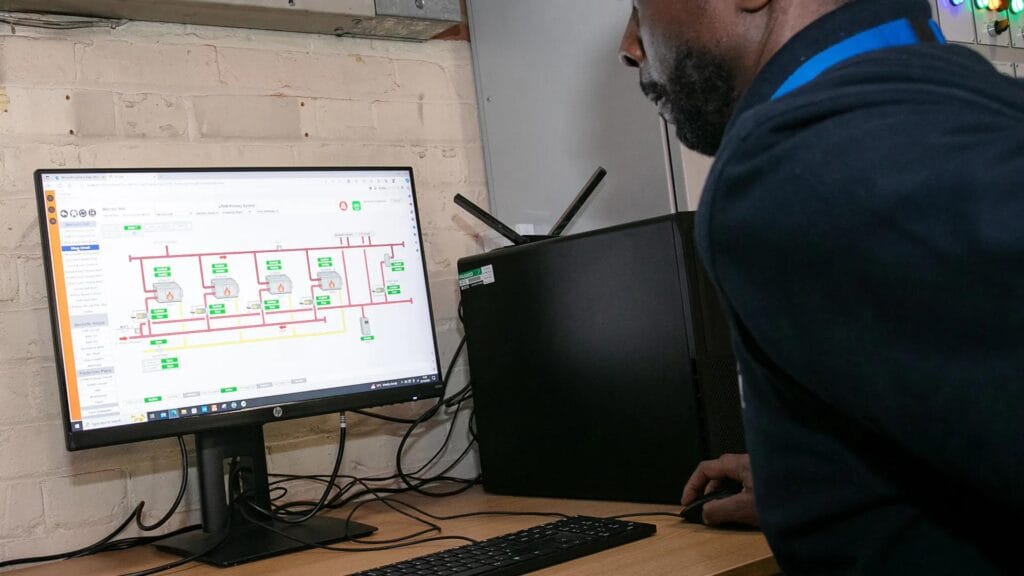
Energy efficiency in buildings is usually pitched as a design problem: better glazing, better insulation, better plant. All true, and all decided once. The savings that keep coming, year after year, are won in operations, which is to say in facility management. Smart building management GCC owners are adopting is really just FM with better data, and in a market where cooling dominates the energy bill, that data pays for itself quickly.
Here is how the technology actually changes the job, and where the real savings hide.
Why operations, not design, decides the bill
A building’s energy performance is set far more by how it’s run than by how it was specified. A well-designed building operated carelessly wastes energy every day: chillers running when spaces are empty, set points fighting each other, equipment left on, faults going unnoticed for months. The design is fixed on day one. The operation is a decision you make every single day, which is exactly why FM is where efficiency is repeatedly won or lost.
In Qatar this is sharpened by the climate. Air conditioning is the largest single energy load in most buildings, so small operational improvements to how cooling runs translate into large absolute savings. There’s a lot of room between a system that merely works and one that works efficiently.
What CAFM and smart tools add
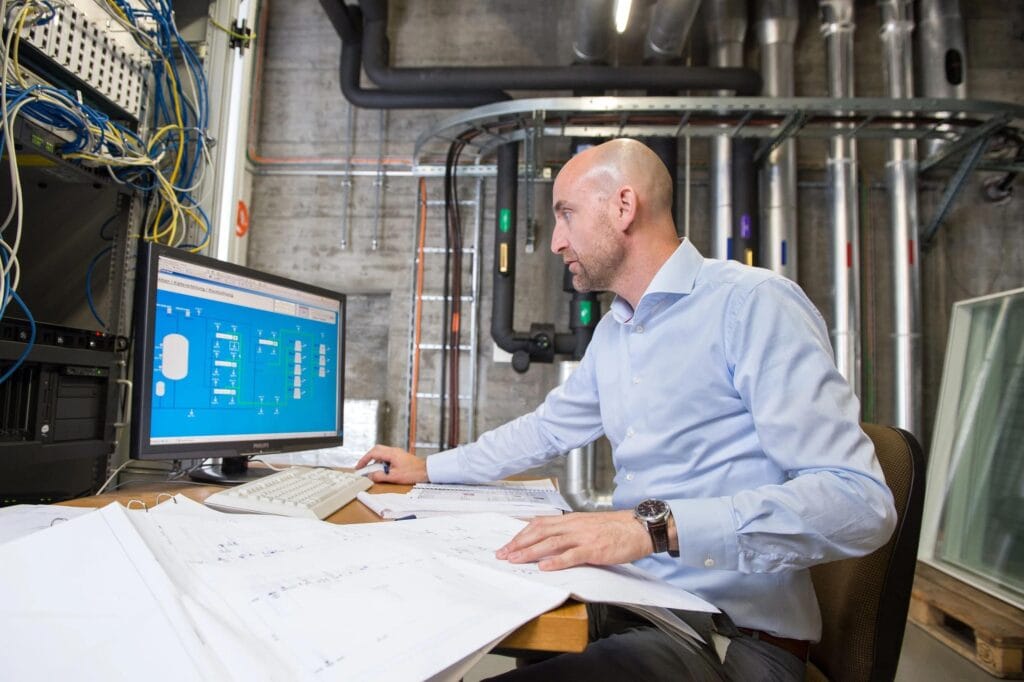
Computer-aided facility management software and connected sensors turn a building from a black box into something you can actually see. Instead of waiting for a complaint or a breakdown, the FM team gets data: which equipment is drifting out of spec, where energy is being used at odd hours, which assets are due for service. Maintenance shifts from reactive to predictive, catching the failing motor or the leaking valve before it becomes an emergency or an efficiency drain.
The value isn’t the dashboard itself. It’s that the dashboard lets a good FM team act earlier and more precisely. Technology without a team that uses it is just an expensive screen in a control room.
The national push gives this momentum
Qatar’s Tarsheed conservation programme has reported substantial energy and emissions savings nationally, and the direction of policy is clearly toward efficiency. District cooling, which serves many of the country’s large developments, already uses significantly less energy than conventional systems. For building owners, the combination of national pressure and rising awareness means efficient operation is moving from a nice-to-have toward an expectation, and FM is the function that delivers it.
Crucially, efficiency and reliability pull in the same direction here. The same predictive approach that saves energy also prevents breakdowns, because a system running efficiently is usually a system running healthily. You don’t have to choose between a lower bill and a more reliable building.
Make the building work smarter
Smart building management isn’t about gadgets. It’s about running the building with enough information to act before problems and waste set in. Compass FM combines maintenance with the monitoring and energy focus that modern buildings in Qatar and the GCC need, so efficiency is part of how the building is run rather than a one-off project. If you want your building to cost less to operate and break down less often, talk to us through our electrical and mechanical services or our HVAC maintenance service.
Sources
Energy Digital: Qatar Cool: A world leader in sustainable district energy. https://energydigital.com/company-reports/qatar-cool-world-leader-sustainable-district-energy
IMARC Group: Qatar District Cooling Market (efficiency vs conventional AC). https://www.imarcgroup.com/qatar-district-cooling-market Qatar Cool: Water and Energy (Tarsheed and conservation context). https://qatarcool.com/qa/water-and-energy/