

Qatar’s summers do not forgive a neglected air conditioner. A unit that runs flat out for eight months a year needs more than an occasional filter swap, and an air conditioning maintenance checklist is the difference between a system that lasts and one that fails on the hottest day of the year.
In this article
Why AC Maintenance Matters in Qatar’s Climate
Cooling in Doha is not seasonal, it is constant. Compressors and condenser fans run near their rated capacity for most of the year, and the fine dust that blows in off the desert settles into coils and filters faster than it would in a milder climate. That combination wears components down quietly. A coil caked in dust forces the compressor to work harder to move the same amount of heat, which raises energy use long before anyone notices a comfort problem.
Air conditioning maintenance is not really about avoiding a single dramatic failure. It is about keeping a system running close to its designed efficiency for its whole working life. Buildings that skip routine servicing tend to replace compressors and outdoor units years earlier than buildings that stick to a schedule, and the electricity bill in between is higher the whole time. Our HVAC maintenance and repair services are built around exactly this pattern: catch the small losses before they add up.
Monthly Checks Every Building Manager Should Run
Most of the checklist does not require a technician, just discipline. These are the tasks that belong on a monthly calendar reminder:
- Inspect and clean or replace air filters. In a dusty environment, a filter can load up in weeks rather than months.
- Walk the outdoor units and clear leaves, sand, and stored equipment away from the intake and discharge sides.
- Check the condensate drain line for slow flow or standing water, which signals an algae or dust blockage forming.
- Listen for new noises: a rattle, a hum that was not there before, or a compressor that cycles on and off more often than usual.
- Spot-check thermostat readings against a separate thermometer to catch calibration drift early.
None of this replaces professional servicing, but it catches the problems that grow between visits, and it gives your maintenance contractor useful information when they do come out.
Quarterly and Seasonal Maintenance Tasks
Some jobs need a trained technician and the right tools. On a quarterly basis, or at minimum before the peak cooling season starts, plan for:
- Coil cleaning on both the evaporator and condenser sides, since dust reduces heat transfer even when airflow looks fine.
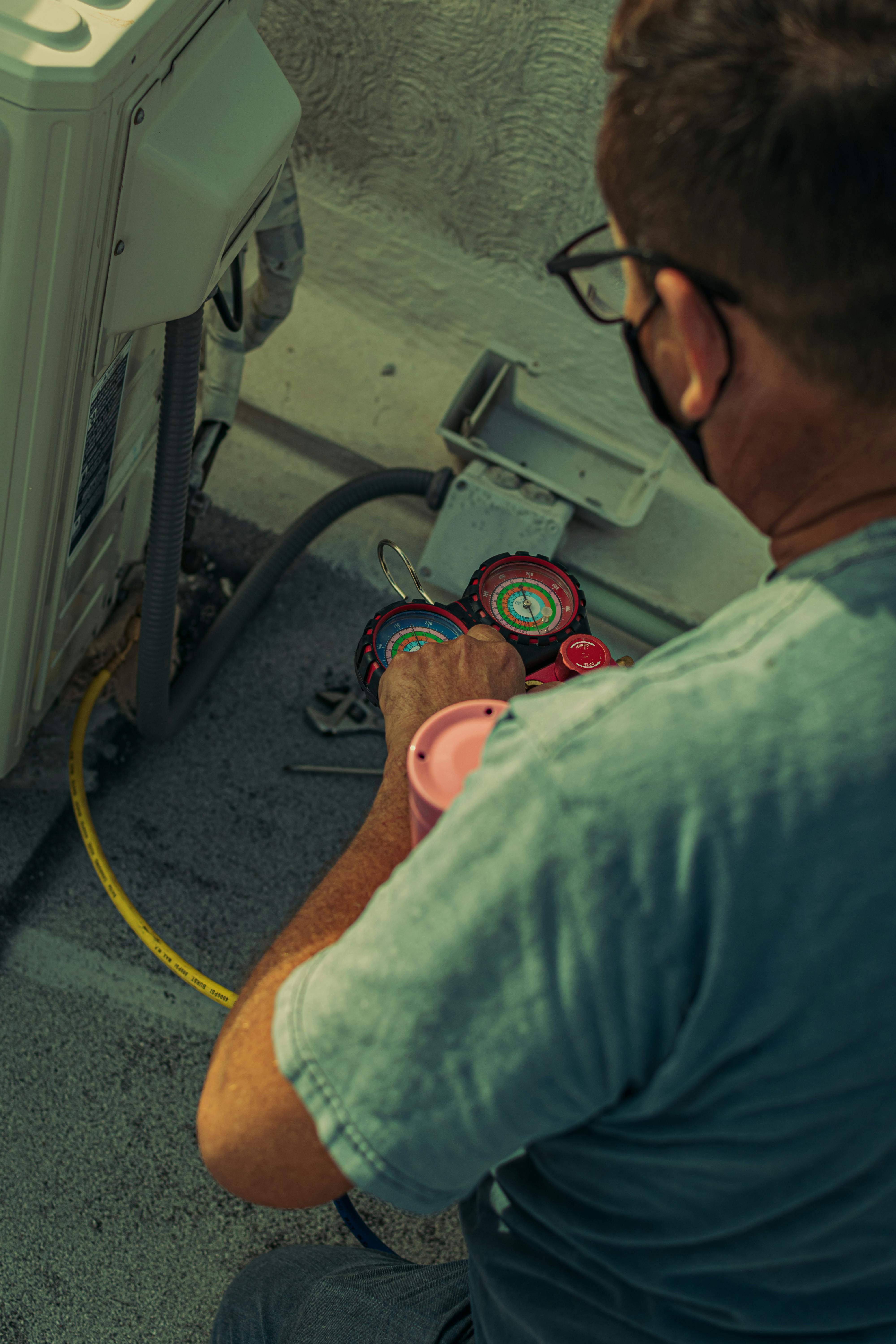
- A refrigerant check. Low refrigerant is one of the most common causes of a unit that runs constantly but never quite cools the space.
- Belt, bearing, and motor inspection on units old enough to have them, since a failing motor bearing is usually audible before it fails outright.
- A visual check of ductwork joints and insulation for leaks, which waste conditioned air before it reaches the room.
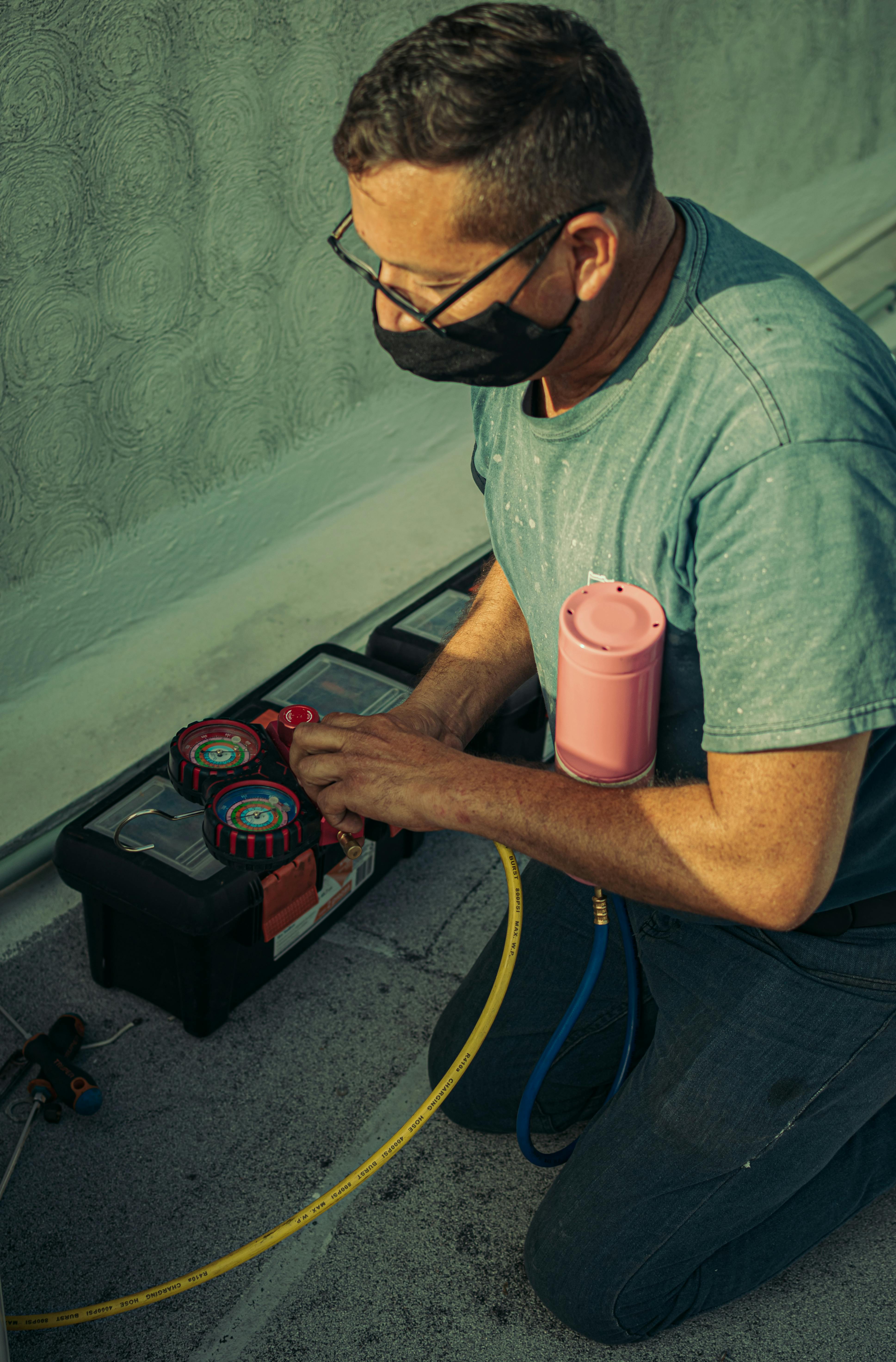
Scheduling this work before the heat peaks matters more than doing it at any exact calendar date. A unit that goes into summer already clean and correctly charged has far less chance of failing when demand on it is highest, and when everyone else’s technician is also busy. Our AC repairing service covers this kind of pre-season work alongside emergency callouts.
Signs Your AC System Needs Professional Attention
A checklist only helps if someone acts on what it finds. Call in a technician rather than waiting for the next scheduled visit when you notice any of the following: weak airflow from vents that used to feel strong, rooms that stay warmer than others on the same system, ice forming on the outdoor unit or refrigerant lines, a sudden rise in the electricity bill with no change in occupancy or weather, a burning or musty smell when the unit starts, or short cycling where the compressor turns on and off every few minutes instead of running a normal cycle.
None of these are emergencies on their own, but each one gets more expensive the longer it runs unaddressed. A compressor that is low on refrigerant and keeps running anyway can suffer permanent damage well before it fails completely.
The cheapest repair is always the one that happens before the breakdown, not after it.
Building an Annual Maintenance Plan
Reactive repair costs more than planned maintenance, almost without exception, because emergency callouts happen on the contractor’s terms and at the worst possible time for the building. An annual maintenance contract puts servicing on a fixed schedule, gives you a documented history of every visit, and usually locks in pricing instead of leaving you exposed to peak-season rates.
A workable plan for most commercial buildings in Qatar includes at least two full servicing visits a year timed around the start and middle of the cooling season, a filter replacement schedule set by actual dust exposure rather than a generic interval, and a simple log that records what was checked, what was found, and what was fixed. That log becomes useful the moment a unit starts acting up, since it tells the next technician what has already been ruled out. Our AMC services are structured around this kind of documented, scheduled approach rather than one-off visits.
Common Mistakes That Shorten Equipment Life
A few habits show up again and again in buildings that replace equipment early. Filters get ignored until airflow visibly drops, by which point the coil behind them is usually dirty too. Small issues like a slow drain or an odd noise get logged as “something to check later” and then forgotten. Outdoor units end up boxed in by storage, planters, or parked vehicles that choke off airflow. Repairs get delayed to avoid the cost, which almost always turns a minor fix into a major one. And servicing gets treated as optional in the cooler months, even though a system that goes into summer already stressed has far less room to cope with the heat.
None of these mistakes are unusual, and none of them are hard to fix once someone decides maintenance is a schedule rather than a reaction. That is really the whole point of a checklist: it turns AC care into a routine instead of a crisis.