
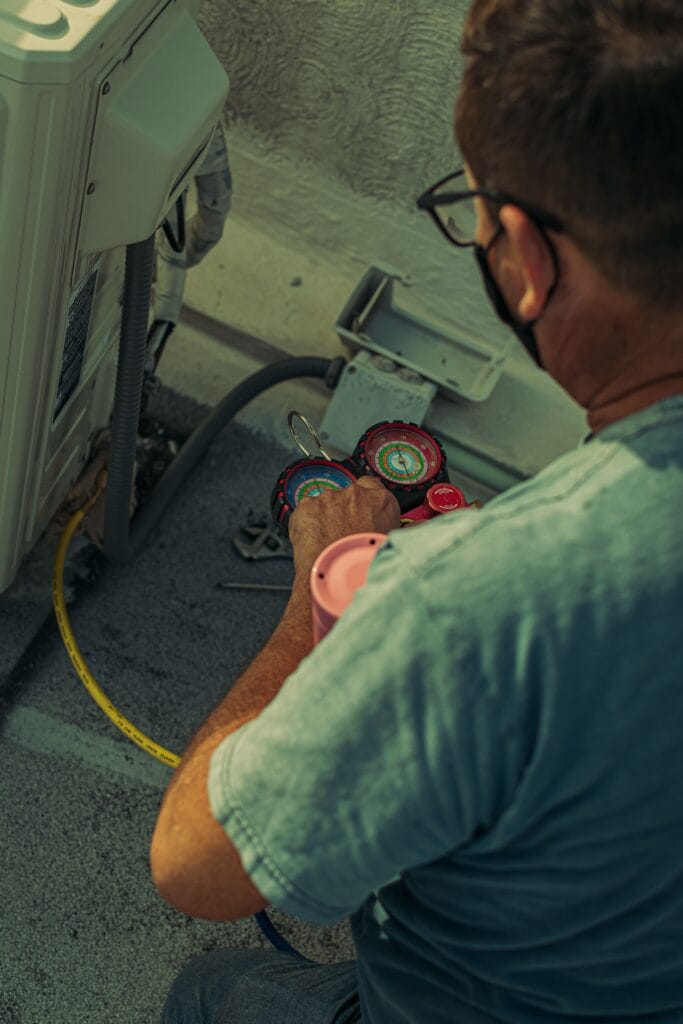
Chiller room vs cold room sounds like a small distinction until the wrong one gets maintained on the wrong schedule. They serve completely different purposes, run at completely different temperatures, and fail in completely different ways.
In this article
Two different jobs, often confused
Facility managers new to a building sometimes assume “chiller room” and “cold room” are interchangeable terms for anywhere cold. They are not. A chiller room houses the equipment that cools water for a building’s air conditioning system. A cold room stores perishable goods, food, pharmaceuticals, sometimes chemicals, at a set low temperature. One cools people indirectly through a building’s air. The other keeps stock from spoiling. Mixing up their maintenance needs is how a supermarket ends up with warm chicken or an office ends up with a chiller compressor that burns out two summers early.
The confusion is understandable. Both sit in a mechanical or back-of-house area most staff never enter, both run compressors, and both get lumped together on a maintenance schedule if nobody stops to separate them. But treat them as the same asset and one of them, usually the one checked less often, ends up neglected.
What a chiller room actually does
A chiller room holds the central plant, compressors, condensers, pumps, and a chilled water loop, that cools air handling units feeding the rest of the building. Chiller temperature is typically set to produce water around 6 to 7 degrees Celsius, which then circulates to cool the air actually delivered to offices, retail floors, or hotel rooms. The chiller itself works hardest in the peak of a Gulf summer, when outdoor temperatures push 45 degrees and the unit has to reject that heat continuously for hours without a break.
Because a chiller is central plant, a failure does not just affect one room. It takes out cooling for an entire floor, wing, or building, which is exactly why HVAC maintenance and repair on this equipment gets scheduled seasonally rather than left until something trips.
Chiller maintenance also has to account for scale. A small office might run a single package unit, while a mall or hospital runs multiple chillers working in sequence, with a building management system deciding how many need to run at any given hour. Servicing one wrong unit, or servicing them out of sequence, can leave a building short on cooling capacity during exactly the hours it needs it most.
What a cold room actually does

A cold room is a self-contained insulated space with its own compressor and evaporator, sized to hold a specific product range at a specific temperature: chilled produce near 2 to 4 degrees, frozen goods well below zero, pharmaceuticals often within a narrow band that cannot drift even briefly. Cold room maintenance is less about seasonal load and more about door seals, defrost cycles, and temperature logging, since a two-degree drift can spoil an entire batch of stock without anyone noticing until it is opened.
Restaurants, supermarkets, pharmacies, and cold chain warehouses across Qatar and the UAE depend on these rooms holding a steady line, day and night, regardless of what is happening with the building’s main air conditioning.
Some cold rooms run below minus 18 degrees for frozen storage, others sit just above zero for fresh produce, and pharmaceutical rooms can require both temperature and humidity logging for compliance. Each variant puts different strain on the compressor and different demands on the seal, which is another reason a generic service visit rarely covers what a cold room actually needs.
Why maintenance requirements differ
A commercial chiller needs its condenser coils cleaned, refrigerant levels checked, and compressors serviced on a schedule tied to ambient heat load, because it is fighting outdoor conditions all day. A cold room needs door seal checks, defrost timer verification, and evaporator coil cleaning, because its main enemy is warm air sneaking in every time a door opens, not outdoor temperature directly.
Treat a cold room’s maintenance plan like a chiller’s, or the reverse, and you end up servicing the wrong failure point while the real one keeps degrading.
Air conditioning maintenance service for a chiller plant typically runs quarterly checks with a heavier service before peak summer. A cold room usually needs closer to a monthly seal and temperature check, since a compromised door seal on a busy kitchen can go from minor to a written-off stock loss within a single shift.
Common failures in each, and what causes them
Chillers tend to fail from the outside in: dirty condenser coils choke airflow, refrigerant leaks slowly drop cooling capacity long before anyone notices a full breakdown, and worn bearings in the compressor create the grinding noise that usually means an expensive call has arrived too late. Most of that is preventable with the coil cleaning and refrigerant checks a proper service schedule already covers.
Cold rooms tend to fail from the inside out, or more precisely, from the door in. A worn gasket lets warm, humid air into a space built to stay dry and cold, which forces the compressor to work harder and eventually causes ice to build up on the evaporator coil. Once that ice builds, airflow drops further, the room struggles to hold temperature, and the whole cycle accelerates. A five-minute seal check catches this stage. A full compressor replacement is what happens if nobody does.
Getting the right contract for each
Buildings that run both, an office tower with a rooftop chiller and a ground-floor café with a walk-in cold room, need a contractor who actually separates the two on paper, not one blanket “HVAC service” line that treats them the same. Ask what specifically gets checked on each visit, and how often, before signing anything.
Compass FM services both sides under one annual maintenance contract, with chiller plant and cold room technicians who understand that a compressor fault on a rooftop unit and a slow seal leak on a walk-in door are not the same emergency, and do not get the same fix.