
Office maintenance in Qatar and the UAE is not a single job. It is HVAC, electrical, cleaning, pest control and half a dozen smaller trades that all have to run on schedule, in a climate that punishes anything left unattended. This guide breaks down what a proper maintenance program actually covers and why skipping pieces of it costs more than it saves.

In this article
Why office maintenance needs a system, not a call-out list
Most offices handle maintenance the same way: something breaks, someone calls a contractor, the contractor shows up in a day or three, the problem gets fixed. That works fine for a stuck door handle. It does not work for a chiller plant, a fire alarm panel, or a rooftop unit that has been running flat out since April.
A proper office maintenance program flips the order. Instead of reacting to failures, it schedules inspections and servicing before anything breaks, tracks what was done and when, and flags equipment that is aging out of its useful life before it takes down a floor. In a region where summer temperatures regularly climb past 45°C, that difference is not cosmetic. A cooling system with a two-week service backlog in Doha in July is not an inconvenience, it is a business risk.
HVAC: the piece that fails first in the Gulf climate
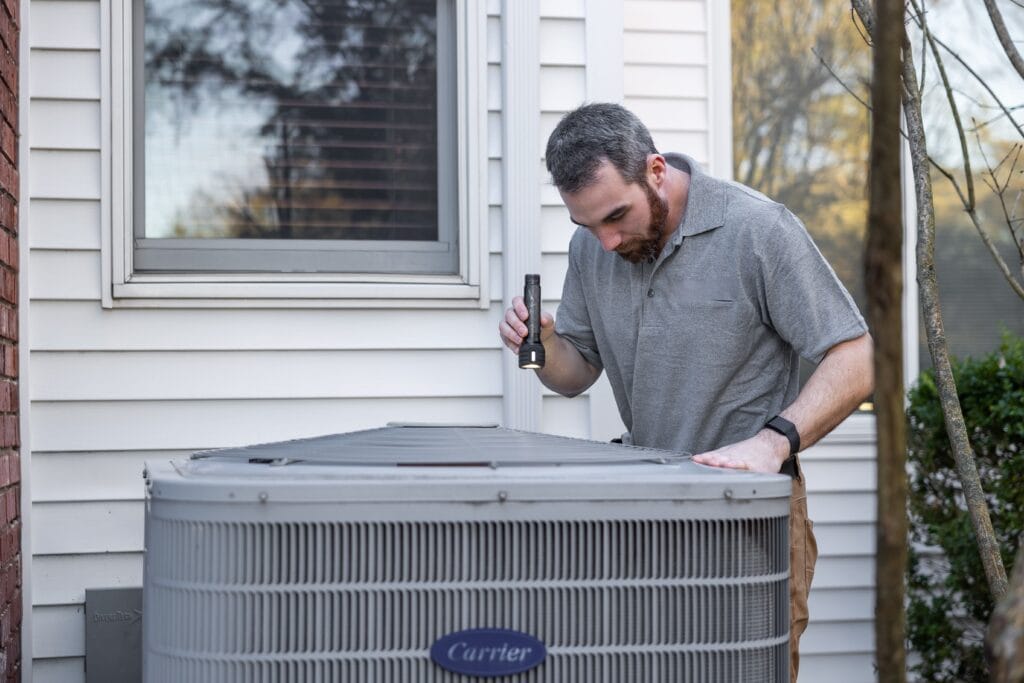
Air conditioning carries more load here than almost anywhere else, and it shows. Filters clog faster with dust, condenser coils fight higher ambient heat, and compressors run longer hours across more months of the year. Skipping a quarterly filter change or a coil clean does not save money, it just moves the cost to a compressor replacement six months earlier than it should have happened.
A serious HVAC maintenance program covers preventive servicing, refrigerant checks, duct inspection, and a documented response time for emergency breakdowns. Ask any contractor for their average response time on a compressor failure before you sign anything. If they cannot answer with a number, that is the answer.
Electrical and mechanical upkeep
Electrical maintenance gets ignored until something trips, and by then the fault has usually been building for months: a loose connection running hot, a panel overdue for thermal imaging, emergency lighting that has not been tested since installation. None of this is glamorous work, which is exactly why it gets skipped.
Bundling electrical and mechanical services under one contract, rather than juggling a separate electrician and a separate plumber, means one team is accountable for the whole building envelope. Power distribution, fire safety systems, plumbing, and standby generators all touch each other in a modern office. Treating them as unrelated jobs is how gaps happen.
Cleaning is maintenance too
It is easy to think of cleaning as separate from “real” maintenance, but dust and grime are mechanical problems in disguise. A dirty condenser coil works harder and dies sooner. Carpets that never get deep-cleaned trap allergens that affect indoor air quality, which then becomes an HVAC complaint. Window seals left dirty degrade faster.
Good commercial cleaning and maintenance covers daily housekeeping, periodic deep cleans, floor care, and window cleaning on a fixed schedule rather than an ad hoc one. Facilities with visitors, whether that is a corporate HQ or a healthcare site, notice the difference immediately, and so do tenants renewing a lease.
The offices that call us in a panic are almost never the ones with a maintenance schedule. They are the ones that had one, on paper, and stopped following it eighteen months ago.
Building a maintenance calendar that actually gets followed
A maintenance plan that lives in a spreadsheet nobody opens is worse than no plan, because it creates false confidence. The ones that hold up share three traits: someone specific owns each task, not “the team”; every visit gets logged with what was checked and what was found; and the schedule adjusts for season, since summer HVAC load and winter dust storms need different attention than the shoulder months.
Quarterly is a reasonable default for HVAC deep servicing, monthly for filters in high-dust areas, and at least twice yearly for electrical panel inspections. Fire safety systems usually have their own regulatory testing intervals, and those are non-negotiable regardless of budget pressure.
In-house team versus an outsourced FM partner
Small offices can sometimes manage with a part-time handyman and a couple of contractor numbers saved in a phone. Anything larger, multi-tenant, or safety-critical usually outgrows that fast. The tipping point is when maintenance starts eating a facilities manager’s whole week reactively instead of a few scheduled hours proactively.
An outsourced facility management partner brings trades under one contract, one point of contact, and one set of records instead of five vendors who each blame the others when something goes wrong. It is not the cheapest option on paper, but it is usually the cheapest option once you count the cost of the failures a proper schedule would have caught.